


Enhancing User Experience Through Accessible Wayfinding
4 Minute Read
Wayfinding plays a crucial role in guiding people from point A to point B effortlessly. It is all around us, from hospitals and retail centres to airports and large grocery stores. With the increase in population
density and greater emphasis on safety and accessibility, wayfinding is gaining a whole new perspective to facilitate stress-free navigation.
Undoubtedly, as a designer, you may wonder how to employ an effective wayfinding strategy to guide your users. Let’s explore a few ways.
What is a Wayfinding Strategy?
In any environment with crowds and large numbers of people, it is essential to have a wayfinding
strategy in place for guidance. This entails incorporating signs, screens, spatial wayfinding, or digital tools to ensure that people can move seamlessly across the facility from one point to another and reach their desired location hassle-free.
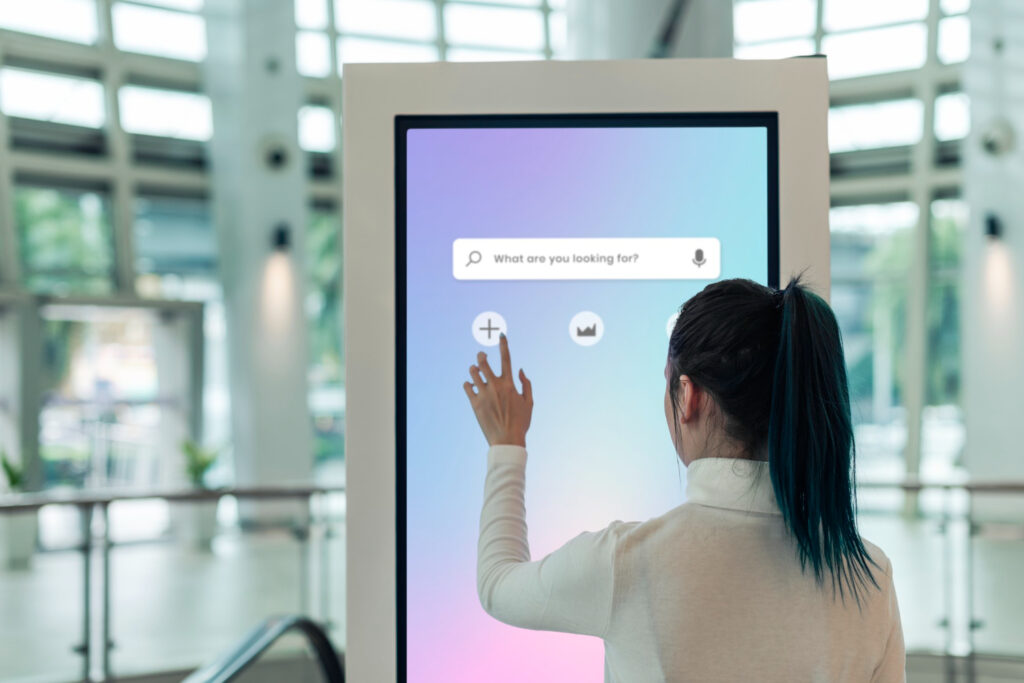
A successful wayfinding strategy integrates both physical and digital components. For example, Cleveland Clinic uses interactive kiosks and digital maps to help patients navigate its sprawling medical campus. Similarly, airports like Singapore Changi integrate interactive kiosks, floor projections, and multilingual digital signage to improve the passenger experience.
Principles of Effective Wayfinding
An effective wayfinding strategy encompasses several key characteristics that enhance its usability. Here are a few.
Clarity and Simplicity
Clutter creates confusion. Whether you are using traditional signs or digital screens, ensure the
information is clear, concise, and minimal. A strong example is the London Underground Map, which has become an icon of design simplicity and clarity.
Consistency in Design
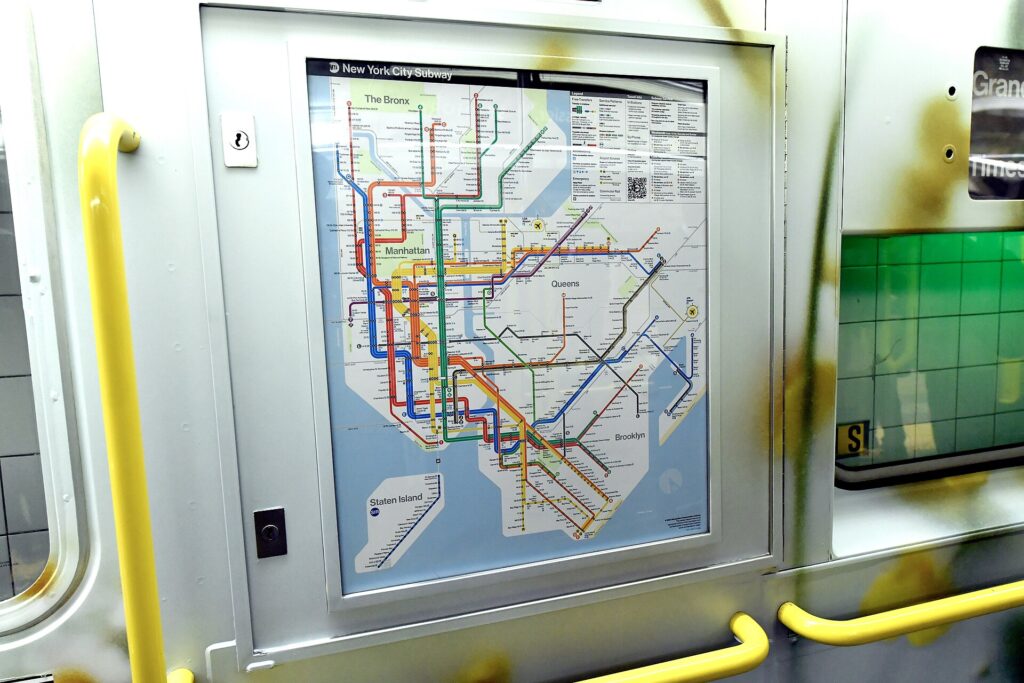
Colours, fonts, and symbols must follow a uniform structure. Avoid mixing bold fonts and different colour schemes, as this can easily confuse users. NYC’s Metropolitan Transportation Authority (MTA) follows a consistent signage system across trains, stations, and buses, making wayfinding intuitive even for first-time visitors.
User Centric Approach
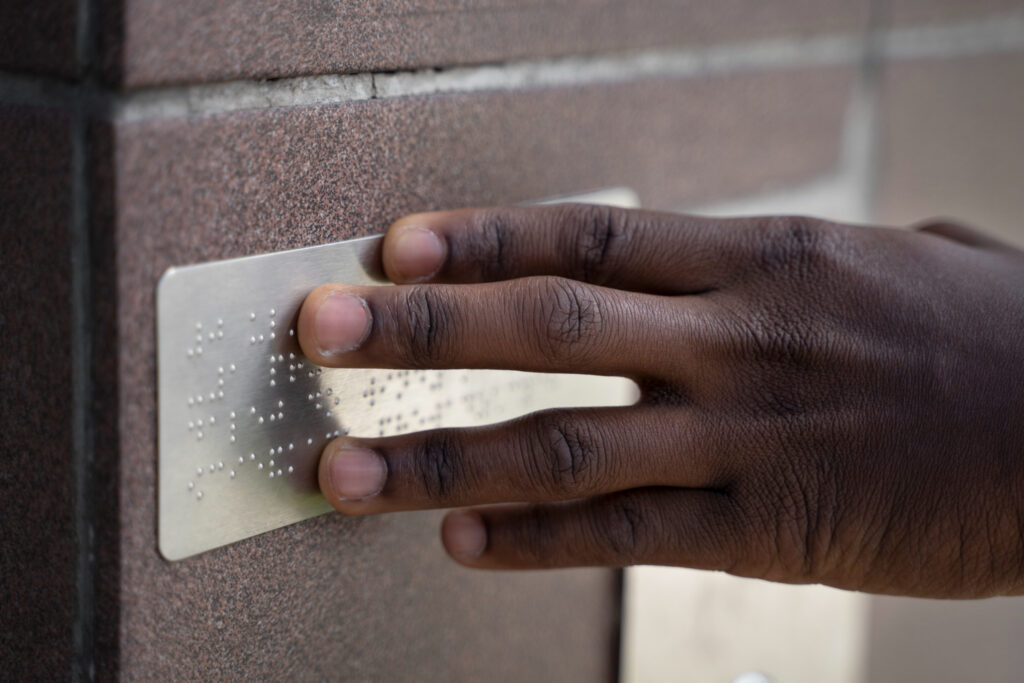
Understanding users is essential. For example, Toronto Pearson International Airport provides
multilingual signage and tactile maps for people with accessibility needs. Features like voice assistance
or Braille signage make spaces inclusive and stress-free for all.
Strategic Placement of Signs
Wayfinding elements should be strategically placed at key points, such as entrances, intersections, and transition areas. In high-traffic zones, interactive kiosks, touchscreens, and QR codes can provide real- time navigation assistance.

Integrate Smart Technology
Modern-day wayfinding is continuously evolving. Now, you can find interactive kiosks that provide real- time navigation assistance, along with a mobile application featuring GPS-based indoor navigation and augmented reality navigation, for an immersive wayfinding experience. Examples of GPS-based indoor navigation that uses augmented reality (AR) overlays include Google Maps Live View for pedestrian navigation in cities and dedicated platforms like Pointr and ARway for indoor venues such as airports, museums, and large retail stores, as well as industrial applications by companies like DHL.
Benefits of Including a Smart Wayfinding Strategy
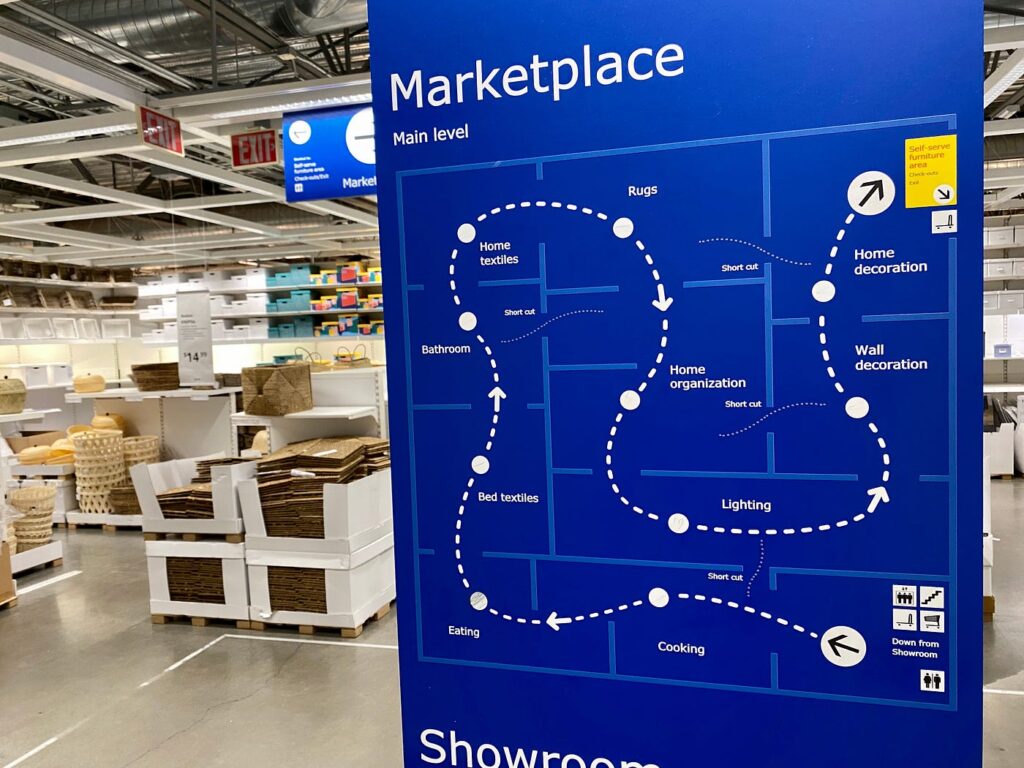
There are many benefits to incorporating a smart wayfinding strategy. For starters, you can provide your users with an improved navigation experience that reduces stress. Take, for example, the renowned furniture store IKEA, which relies less on digital wayfinding screens and includes light-based signs to guide people throughout its stores. It also has a specially designed app that guides customers through a curated path to find products and departments throughout its stores.
Another added benefit of smart wayfinding is that it enhances operational efficiency, reducing the need for staff assistance and freeing up more time for them to focus on their work. Moreover, an intuitive wayfinding system enhances brand perception and encourages users to explore more areas within a facility.
It is evident that an effective wayfinding strategy can guide people smoothly and reduce stress. That’s why investing in a strategic wayfinding system is not a luxury, but a necessity, in our constantly evolving, fast-paced world.
Ready to make your space more intuitive and accessible?
Every space tells a story, make sure yours guides people with ease. Partner with 11th Floor Design to create signage and wayfinding strategies that are simple, accessible, and memorable.
Leave a Reply